

The United Nations Office at Geneva
Multimedia Newsroom
Press Conferences | WHO , WFP , UNICEF , OCHA , UNCTAD
UN Geneva Press Briefing - 21 November 2025
UN GENEVA PRESS BRIEFING
21 November
Humanitarian situation in Gaza
Abeer Etefa, for the World Food Programme (WFP), speaking from Cairo, said that Gaza was facing heavy rains and falling temperatures. Flood waters had washed away many families’ meagre possessions and supplies, indicating of what the winter ahead could bring. Hundreds of thousands of people remained in urgent need of food assistance. Access to basic needs items was still very limited, and the rain was making it worse. Since 10 October, WFP had brought in over 40,000 tons of food into Gaza, which amounted to about two-thirds of its monthly target; this had reached over 530,000 people, one-third of the WFP’s monthly target. WFP-supported bakeries supported 160,000 bread bundles per day, meeting WFP’s daily targets, said Ms. Etefa. Hot meals were back, with over 35 kitchens providing 210,000 meals per day, about half of the target. The digital cash assistance had reached some 125,000 people, half of the November targets. This was the ideal time to scale up cash assistance, which would allow families to access food supplies. WFP was also conducting winterization activities along with its humanitarian partners. Logistical challenges persisted, with some key routes closed or congested. WFP needed full access to all crossings and routes in Gaza and welcomed the opening of the northern opening in Zikim, the critical entry point for the people in the north of the Gaza Strip.
Martin Penner, also for the World Food Programme (WFP), connecting from Gaza, said that there was a lot of uncertainty among the people of Gaza, who were worried about the very concrete, practical realities of life: whether the ceasefire would hold, how to keep warm, rebuild and provide for their families. While things were improving under the ceasefire, the improvement was not fast enough for many families. The upcoming winter was a reminder of how fragile many families in Gaza still were, being exposed to the elements and having their food and possessions washed away. Markets were coming back to life, food was out there, but prices were out of reach for many people, with chicken, for example, costing USD 20. People needed fresh food, such as fruits, vegetables, meat, and eggs. While these items existed on the market, they were out of reach for most people. An example was provided of a woman who would divide a single apple among her four children. Mr. Penner emphasized that the situation was better than before the ceasefire, but there was still a long way to go. It was critical to provide sustained support for families in Gaza, he concluded.
Dr. Rik Peeperkorn, World Health Organization (WHO) Representative in the occupied Palestinian territory, speaking from Jerusalem, said that at least 266 people had been killed in Gaza since the ceasefire. Needs remained immense compared to health care availability. Only half of Gaza’s 36 hospitals were partially functional, 40 percent primary health care centres were functional, and ten field hospitals were functional. There were no functioning hospitals in North Gaza where at least 20,000 people were estimated to be. Twelve hospitals were currently partially functioning in Gaza City. At Shifa, for example, WHO was working on setting up a desalination plant to serve the hemodialysis unit, which was the only unit serving Gaza and North Gaza. Meanwhile, access to European Gaza Hospital continued to be denied, as this hospital remained outside the “yellow line” (ceasefire line). WHO needed to access the hospital to transfer critical cardiac equipment which was urgently needed for use in other hospitals. Dr. Peeperkorn further informed that since the beginning of the ceasefire, WHO had brought in 2,050 pallets of medical supplies into Gaza, including for partners. Zikim border crossing had reopened after two months of closure, bringing the total number of open crossings to three, along with Kerem Shalom and Kissufim. Meanwhile, Rafah crossing remained closed. Within Gaza, Salahuddin road was blocked, due to which coastal road needed to be taken for missions causing delays as well as exposure to risk of looting. According to the local Ministry of Health, 343 out of 622 essential drug items were currently at zero-stock levels, including 74 per cent of chemotherapy and blood disease drugs, and 64 per cent of primary healthcare drugs.
Speaking of immunization, Dr. Peeperkorn stated that the first round of the catch-up immunization campaign in the Gaza Strip had concluded the previous day. Between 9 and 20 November, more than 13,700 children had been vaccinated during a campaign led by UNICEF, UNRWA, WHO and partners, in collaboration with the Ministry of Health, and supported by Gavi, the Vaccine Alliance. The campaign had also integrated malnutrition screening. Of the 6,827 children screened, 508 children had been identified as acutely malnourished and referred to the nearest nutrition facility for treatment. Preparations were already underway for rounds two and three, to ensure children have received the necessary vaccine doses required for full protection. Over 16,500 patients in the Gaza Strip needed medical evacuation outside the Gaza Strip. WHO continued to call for more countries to show solidarity with patients in urgent need of specialized care outside Gaza and for the opening of all evacuation corridors, especially to the West Bank, including East Jerusalem, which was the most cost and time effective route, and hospitals were ready to receive many patients.
Ricardo Pires, for the United Nations Children’s Fund (UNICEF), said that UNICEF welcomed the fact that the Civil-Military Coordination Center (CMCC) had facilitated customs clearance and, together with Israeli authorities, allowed 1.6 million syringes to be dispatched to Gaza, essential items for an ongoing routine immunization campaign. The first round had finished the previous day, with over 13,000 children vaccinated. UNICEF hoped that other pending supplies that had been awaiting customs clearance for several months would also be released for entry into Gaza by the authorities at the earliest opportunity.
Turning to the grim reality in Gaza, Mr. Pires stated that the previous day, a baby girl had been reportedly killed in an airstrike in Khan Younis while the day before, seven children had been killed in Gaza City and the south. Since 11 October, with the ceasefire in effect, at least 67 children had been killed in conflict-related incidents in the Gaza Strip. Dozens more had been injured. That was an average of almost two children killed every single day since commitments were made that the killing would stop. These were not statistics; these were real children with their dreams and futures cut short. The reality of Gaza’s children remained brutally simple and cruel. The aid had to enter faster, and the stakes remained incredibly high, especially for hundreds of thousands of children living in tents and among rubble. Respiratory infections were on the rise, and polluted water was leading to waterborne diseases. Gaza’s doctors were telling UNICEF that they knew how to help children but had no means or supplies to do so. For many sick or injured children, save and immediate evacuations would make a difference between life and death. There were some 4,000 children in Gaza waiting for swift evacuation. The medical corridor to the West Bank and East Jerusalem needed to be reopened, but other States ought to welcome more children from Gaza. Too many children in Gaza had already paid the highest price, and too many were continuing to do so even under the ceasefire. The world had promised to protect them and had to act now.
Answering questions from the media, Martin Penner, for WFP, said that in early November, WFP had experienced some difficulties getting food supplies into its warehouses, but the situation had been better over the last week. WFP’s rations were currently the size of 75 percent of what they should ideally be. The attacks from the previous day had not significantly affected WFP’s operations, explained Mr. Penner. Dr. Peeperkorn, for WHO, said that the UAE Hospital was out of reach for patients because it lay behind the “yellow line”. WHO was focusing its operation on the “red zone”, where a huge majority of Gazans lived. With winter coming, there was an increase in acute respiratory infections as well as acute water diarrhea. To visit Gaza, interested journalists would need to apply for and get their clearances individually, explained Mr. Pires responding to another question. Ms. Etefa, for WFP, said that the problem with food supplies was that many of them spent many hours at crossing points, which could affect their quality and expiration. She was not aware of the restrictions on fresh supplies getting in, but the private sector might prefer products with a longer shelf life.
Mr. Penner explained that WFP discussed its operations with the Civil Military Coordination Center (CMCC) and Coordination of Government Activities in the Territories (COGAT). Not all 800 trucks entering Gaza per day, reported by CMCC, were WFP trucks or even humanitarian agencies’ trucks, she said. WFP was currently getting into Gaza some two-thirds of necessary supplies through an average of 100 trucks per day. Dr. Peeperkorn, for WHO, stressed the “One Gaza” approach, even though the Gaza Strip was currently divided into two parts by the “yellow line”. While incremental changes had been made since the October ceasefire, much more was needed, including medical evacuations, which was something WHO was regularly raising with CMCC and COGAT. Throughout this crisis, WHO had proven its operational capacity and had delivered, thanks to the support of over 30 partners. It was hoped that early recovery and rehabilitation efforts would also be supported.
Rolando Gómez, for the United Nations Information Service (UNIS), said that while the Security Council resolution on Gaza was welcome and provided a path forward, what was needed was practical and concrete action on the ground.
Humanitarian situation in Ukraine
Jens Laerke, for the Office for the Coordination of Humanitarian Affairs (OCHA), said that OCHA had briefed the Security Council on Ukraine the previous day. There were no longer any safe places in Ukraine, he stressed. Relentless Russian missile and drone attacks continued to injure and kill civilians across the country, while the situation was most dire in frontline communities. In Lyman, for example, some 3,000 people were out of reach of humanitarian assistance all together because of the ongoing strikes. Earlier this week, air attacks had claimed over 20 civilian lives and injured more than 100 civilians. Children remained among the most exposed in this war, and many had been displaced multiple times. They no longer had a safe place to play, learn, or live. Nationwide frequent power cuts were depriving families of heating and drinking water. Some 3.5 million people were displaced within Ukraine and over six million Ukrainian refugees remained abroad. More than 4.2 million people had been reached by the UN and partners this year, informed Mr. Laerke. Civilians, civilian infrastructure, medical and humanitarian personnel had to be protected. Children needed to be shielded – there was no excuse for not doing so.
Replying to questions, Mr. Laerke said that the situation was getting worse, with attacks on humanitarian convoys and warehouses. The UN Humanitarian Coordinator in Ukraine had recently spoken of “energy terror” against Ukraine.
Announcements
Catherine Huissoud, for the United Nations Trade and Development (UNCTAD), informed that a new UNCTAD report, “Developments in the Economy of the Occupied Palestinian Territory”, would be presented at a press conference on 25 November at 9: 45 am. It documented an unprecedented collapse of the Palestinian economy, with serious social and environmental consequences. Ms. Huissoud reminded that for nearly 40 years, UNCTAD had been conducting research and providing technical cooperation services and capacity building support. Speakers at the conference would be Pedro Manuel Moreno, UNCTAD Deputy Secretary General, Mutasim Elagraa, Coordinator of UNCTAD Assistance to the Palestinian People, and Rami Alazzeh, an UNCTAD Economist.
Rolando Gómez, for the United Nations Information Service, said that on 25 November at 2 pm, ahead of the World AIDS Day, Winnie Byanyima, UNAIDS Executive Director, would hold a press conference on overcoming disruption and transforming the AIDS response.
The Committee against Torture was going to have a public meeting, on 24 November, at 4 pm, devoted to the follow-up of articles 19 and 22 of the Convention and to the question of reprisals.
The Committee on the Elimination of Racial Discrimination was concluding this morning its review of the report of Sweden.
Mr. Gómez informed that the UN Secretary-General was in Johannesburg, where he would at end the annual G20 Summit and deliver three addresses. After South Africa, he would go to Luanda, Angola, where he would attend the seventh African Union-European Union Summit.
Finally, he said that today was World Television Day.
***
Similar Stories

1
1
1
Press Conferences | IOM , UNDRR
UN stresses importance of household preparedness for disaster risk reduction.
1
1
1
Statements , Press Conferences | OHCHR
1
1
1
Press Conferences | UNHCR , UNICEF , IFRC , OHCHR , UN WOMEN , IOM , OCHA , WHO
UNHCR – ExCom Meeting, UNICEF – Nepal Recovery, IFRC – Flash Floods, WHO – Mental Health, IOM – South Sudan Floods, OCHA – DRC Humanitarian aid, UNHCR – Sahel Displacement, UNICEF – Yemen Update, IOM – Gaza Shelter, UN Women – Gaza Women, OHCHR – Arrests and detentions of Syrians by Israeli force
2
1
2
Press Conferences | UNCTAD
Presentation of the Trade and Developement Report 2026
Embargoed until 9 October 2026 at 11 a.m. (Geneva Time)
UNCTAD: UNCTAD’s flagship report finds that governments increasingly use industrial, trade, financial and technology policies to pursue economic and national security objectives. Market access and the ability to move into higher-value activities now depend more heavily on technology, finance and geopolitics.
1
1
1
Press Conferences | UPU
Release of the State of the Postal Sector Report 2026
1
1
1
Press Conferences | IOM , ITU , UNECE , UNICEF , WHO , WMO
UNICEF: Ebola, DRC - children orphans or separating them from parents and caregivers; IOM: Humanitarian needs in Djibouti amid arrivals from Yemen and increased migrant movements; WHO: Darfur, scale of health needs far exceeds available resources; WMO co-sponsored Global Heat Forum, Bangkok, monthly Global Seasonal Climate Update; UNECE: UN Forum of Mayors; ITU Plenipotentiary Conference 2026; WHO: child and adolescent obesity guidelines and new global roadmap to tackle pregnancy hypertension, a leading cause of maternal mortality
1
1
1
Press Conferences | OCHA , UN WOMEN , UNHCR , WFP , WHO , WTO , UNEP
OCHA – $160M CERF allocation to 12 underfunded crises; UNHCR – 5.8M refugee children remain out of school amid funding cuts; UN Women – Middle East escalation and food security among women/girls; WHO – Gaza supplies and overall situation; WFP – Yemen food insecurity and impact on global hunger ; UNEP - First International Conference of the Global Framework on Chemicals in Geneva | 16-20 November 2026
1
1
1
Press Conferences | UNHCR , WHO
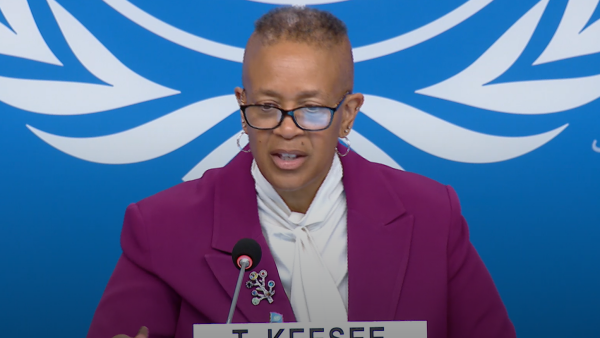
Yemen's health system nears collapse amid conflict, causing rising casualties and medicine shortages.
1
1
1
Press Conferences | HRC
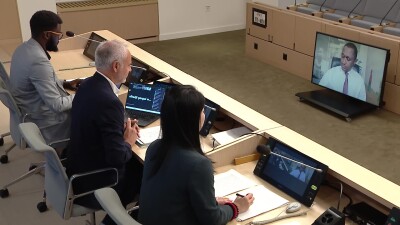
Update by the Expert Mechanism to Advance Racial Justice and Equality in Law Enforcement
1
1
1
Press Conferences | WIPO , WHO , UNICEF , UNHCR , IOM , WFP , FAO
WIPO Global Innovation Index 2026 launch and press conference, WHO Composition of influenza vaccines for the 2027 Southern Hemisphere flu season, UNICEF Yemen hunger and malnutrition; UNHCR Sudan displacement into Chad; IOM Ebola and population movements in DRC; WFP emergency food assistance in Nepal; and FAO food loss and waste.
2
1
2
Press Conferences | UNCTAD
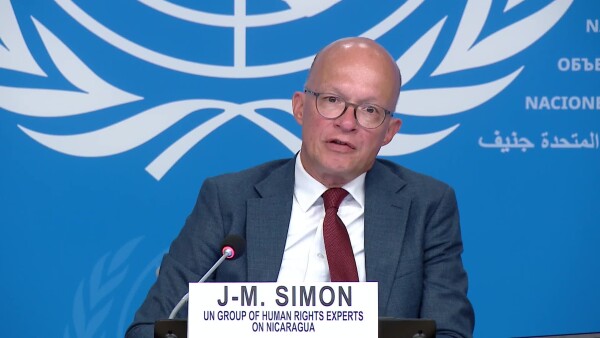
Gaza reconstruction needs reach $71.5 billion as Palestinian economy and public finances face severe strain. Latest UNCTAD report documents the loss of decades of development gains, economic collapse in Gaza and tightening economic constraints in the West Bank.
The report identifies three immediate priorities: transferring withheld Palestinian revenues, safeguarding the banking system and aligning reconstruction support with the documented scale of damage and economic losses.
1
1
1
Press Conferences | HRC
Press conference on the situation of human rights in Nicaragua by the UN Group of Human Rights Experts